
I want to share just a few words on this extraordinary film, Wolfgang Staudte’s Murderers Are Among Us (1946). Warning: spoilers ahead.
The film comes out of Berlin and the immediate aftermath of the war – and it tells a story that, much like Rome Open City, reflects on the experience of the war. Susanne Wallner returns from a concentration camp looking like she just got back from a Mediterranean cruise. She discovers Dr. Hans Mertens living in her apartment. Not your classic meet-cute. He’s scarred by the war, crazy, disheveled, a drunkard. He spends his days wandering the rubble-strewn streets and visiting the cabarets, while she begins to draw again. Of course, Suzanne falls in love with Hans, but he doesn’t know if he can love again. So, #1, we have a love story.
But it’s 1945 in war-scarred Berlin. Things aren’t going to be so easy for these lovebirds. It turns that Hans’ old captain is still alive, Ferdinand Brückner. Alive and thriving in postwar Berlin, turning helmets into cooking pots and making good money. We hate to see bad guys prosper. Story #2: revenge. Will Hans kill Brückner for the crimes of war?
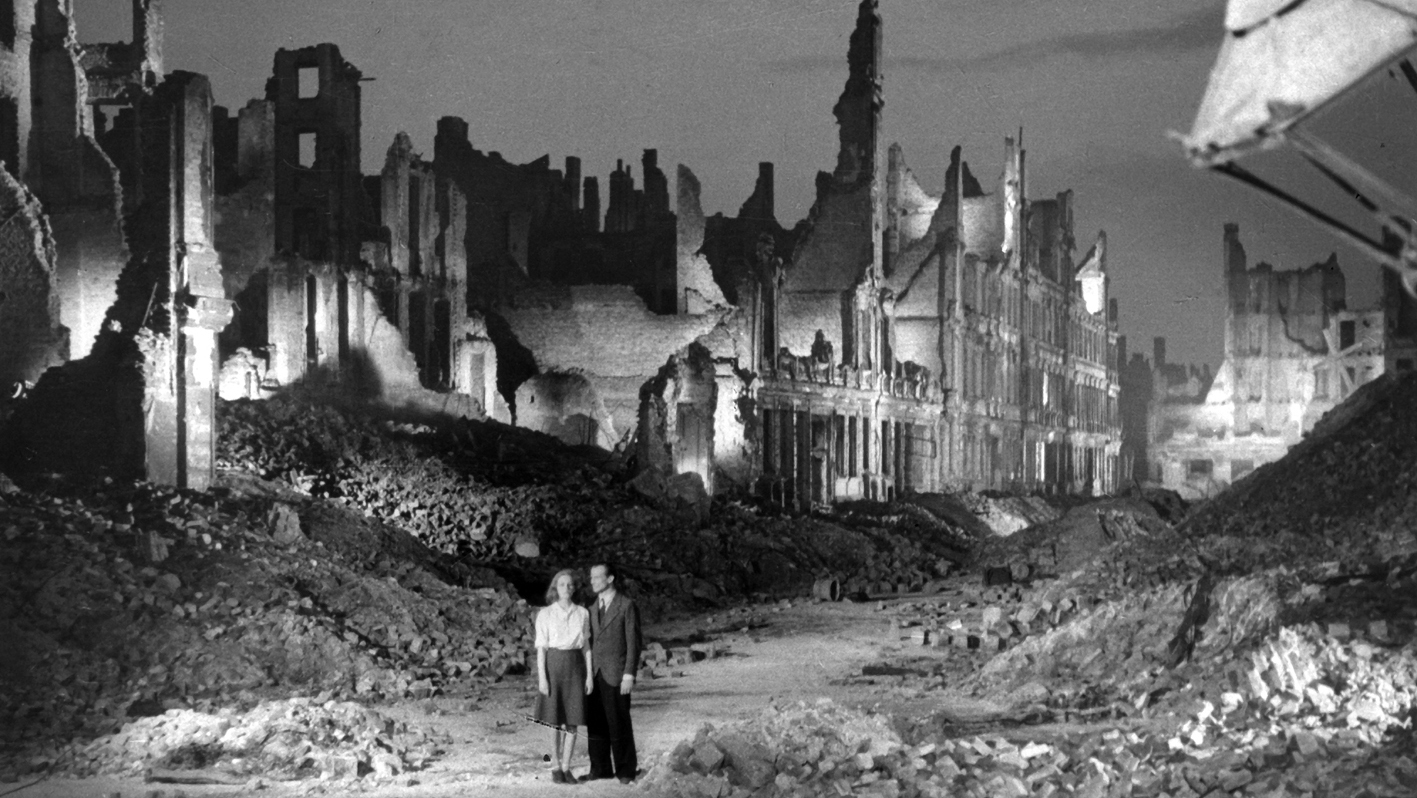
We can take time to discuss what the story means. I want to say a few words about the film’s style. The lighting, the cinematography, the soundscape all deserve some close attention. We’ll take a look at some striking compositions: canted shots, shadows looming over figures, evocative lighting, high angles. Staudte made his film in the shadow of the Nazi experiment (more on this when we get together), but he emphatically rejected the film styles of the Nazi period. His film harkens back to the styles (and the themes) of Weimar (that is pre-Nazi) German cinema (think the films of Fritz Lang, for example). The truth is out there, but it is obscure, hard to read. And moral corruption is everywhere. How do we start again? The answer for Suzanne and Hans – see #1 – is romantic love. The answer for Staudte seems to be a return to the filmmaking world of the 1920s and 1930s.